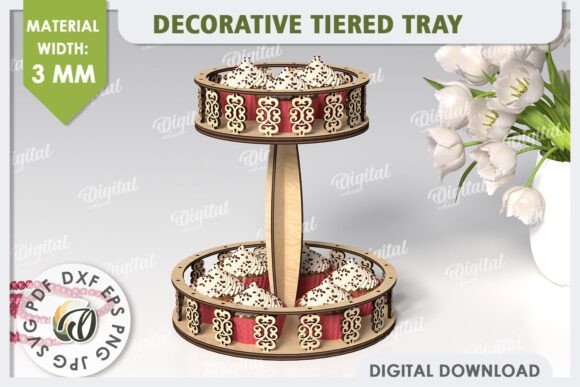
Unlocking Creative Potential with 3D Decorative Tiered Tray Laser Cut Files
In the evolving landscape of digital fabrication, the shift from purchasing finished goods to acquiring the means of production has become a defining trend for creators and small business owners. Among the myriad of assets available for laser cutting, the 3D Decorative Tiered Tray Laser Cut design set stands out as a particularly versatile resource. It is essential to clarify immediately that this offering is a digital product. No physical trays, wood pieces, or acrylic sheets will be shipped to your door. Instead, the value lies in a comprehensive zip folder containing high-precision vector and raster files designed to empower you to manufacture these items yourself or through a local service bureau.
For professionals ranging from interior designers to Etsy sellers, understanding the utility of such digital assets is crucial. This article evaluates the practical application, technical specifications, and strategic value of integrating these specific laser cut designs into your workflow.
Defining the Asset: More Than Just a File
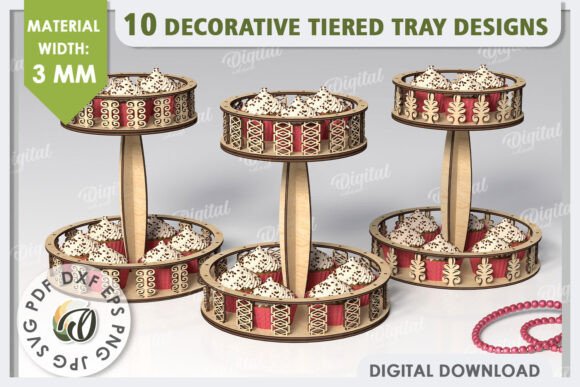
At its core, a 3D Decorative Tiered Tray Laser Cut file is a blueprint for constructing a multi-level display stand. Unlike simple 2D coasters or signage, these designs require an understanding of assembly, joinery, and spatial arrangement. The "3D" aspect refers to the structural depth achieved when the flat materials are interlocked according to the provided patterns.
The primary purpose of these files is to facilitate the creation of original home decor or office organization solutions. Whether intended for holding spices in a kitchen, displaying skincare products on a vanity, or organizing stationery in a creative studio, the tiered structure maximizes vertical space while maintaining an aesthetic appeal. The "decorative" element usually implies intricate detailing—such as filigree patterns, geometric motifs, or custom monogram spaces—that elevates the item from a purely functional organizer to a piece of art.
Technical Composition and File Versatility
The true strength of a high-quality digital download lies in its compatibility and readiness for production. A robust package for a 3D Decorative Tiered Tray Laser Cut project should not limit the user to a single software ecosystem. The inclusion of multiple file formats is a critical indicator of usability:
- SVG and DXF: These are the industry standards for vector-based laser cutting software like LightBurn, RDWorks, and Adobe Illustrator. They ensure that lines remain crisp and scalable without pixelation, which is vital for precise kerf adjustments.
- EPS: Essential for graphic designers who may need to integrate the tray design into larger branding packages or modify the vectors within professional suites like CorelDRAW.
- PDF: Often used for quick previews or sending to print shops that accept PDF inputs for laser services.
- JPEG and PNG: While not used for the cutting path itself, these raster images are invaluable for marketing. They allow sellers to create mockups, social media posts, and product listings before even cutting the first piece of material.
This diversity in file formats ensures that whether you are a hobbyist with a desktop diode laser or a professional operating an industrial CO2 machine, the files can be imported, edited, and executed with minimal friction. The ability to scale these designs is another significant advantage. Because they are vector-based, you can resize the 3D Decorative Tiered Tray Laser Cut pattern to fit specific material constraints or desired dimensions without losing structural integrity, provided you adjust the joinery slots accordingly.
Practical Application and Real-World Performance
When evaluating how these designs perform in a real-world setting, one must consider the material interaction. The photos typically associated with these listings serve only as inspiration; they demonstrate what is possible when the right materials meet precise engineering. In practice, the success of the final product depends heavily on the creator's choice of substrate.
For a rustic, farmhouse aesthetic, 3mm or 6mm birch plywood is often the preferred choice. It offers excellent contrast when engraved and holds joints tightly. Conversely, for a modern, sleek look suitable for bathrooms or offices, cast acrylic provides a transparent, high-end finish. The 3D Decorative Tiered Tray Laser Cut designs are generally optimized for standard material thicknesses, but a savvy operator will always perform a test cut to verify slot tolerance. This step is non-negotiable for ensuring the tiers sit level and the structure remains stable under the weight of displayed items.
From a functional standpoint, these trays excel in scenarios requiring visual hierarchy. By elevating certain items above others, the design guides the viewer's eye and makes efficient use of limited surface area. For small business owners selling handmade soaps, candles, or jewelry, using a custom-branded tiered tray as a display prop can significantly enhance product presentation at craft fairs or in retail pop-ups.
Who Benefits Most from This Digital Solution?
The audience for this type of digital asset is broad, but specific groups will find disproportionate value in acquiring these files:
- Laser Cutting Service Bureaus: Offering pre-designed, popular items like tiered trays allows bureaus to expand their catalog without investing in in-house design time. They can produce these on demand for walk-in customers.
- Etsy and E-commerce Sellers: For entrepreneurs looking to sell physical home goods, buying a commercial license (where applicable) for these designs accelerates time-to-market. Instead of spending weeks designing a joint system, they can focus on production, finishing, and marketing.
- Interior Designers and Stagers: Professionals who need custom props for photo shoots or client homes can fabricate unique pieces that match specific color palettes or themes, something off-the-shelf plastic organizers cannot achieve.
- Educators and Makerspace Instructors: These files serve as excellent teaching tools for demonstrating 3D construction from 2D plans, tab and slot mechanics, and finishing techniques.
Evaluating Quality and Long-Term Value
When assessing the long-term value of a 3D Decorative Tiered Tray Laser Cut purchase, consistency and reliability are paramount. A well-engineered file set minimizes material waste by optimizing nesting potential. Furthermore, the clarity of the cut lines affects the amount of post-processing required. Clean vectors mean less sanding and fewer burn marks, leading to a more professional final product.
It is also worth noting the flexibility these files offer for customization. Unlike a mass-produced item, a digital file allows you to add personal touches. You might engrave a family name on the side panel, alter the shape of the tiers to accommodate specific bottle sizes, or combine elements from different designs to create a hybrid piece. This adaptability extends the lifecycle of the asset; it is not a one-time use template but a foundational tool for ongoing creativity.
However, potential buyers must maintain realistic expectations. Since this is a digital download, there is a learning curve associated with operating laser machinery and finishing wood or acrylic. The files do not automatically guarantee a perfect product; they require skillful execution. Additionally, users must verify the licensing terms regarding commercial use if they intend to sell the physical outcomes.
Final Recommendations for Implementation
To maximize the effectiveness of your purchase, start by reviewing the included instruction diagrams, if available, and cross-referencing them with your machine's capabilities. Always account for the kerf—the width of material removed by the laser beam—when testing fitment. If you are new to 3D assembly, begin with a smaller scale prototype using scrap material before committing to expensive hardwoods or premium acrylics.
The 3D Decorative Tiered Tray Laser Cut represents a convergence of digital convenience and tangible craftsmanship. It empowers individuals to bypass the limitations of retail inventory and create bespoke solutions tailored to exact needs. Whether for enhancing a home office, launching a product line, or simply enjoying the process of making, these digital assets provide a solid foundation for innovation. As with any tool, its value is ultimately determined by the vision and skill of the person wielding it.
If you have specific questions regarding file compatibility or material recommendations, reaching out to the creator directly is often the best course of action. Happy shopping, and may your cutting projects be precise and your creations inspiring.