Golden Art Deco Dividers: Decorative Elements for Modern Luxury Design
The visual language of the 1920s and 1930s continues to captivate designers, content creators, and brand strategists nearly a century later. At the heart of this enduring aesthetic lies the Golden Art Deco Dividers. Decorative elements that serve as more than mere separators; they are statements of elegance, precision, and opulence. In an era where digital content often feels sterile or uniform, integrating these retro gold dividers and luxury 1920s decoration elements offers a tangible way to elevate the perceived value of any project. Whether utilized in print media, web design, or event branding, these geometric borders and ornaments bridge the gap between historical grandeur and contemporary functionality.
The Anatomy of Art Deco Separation
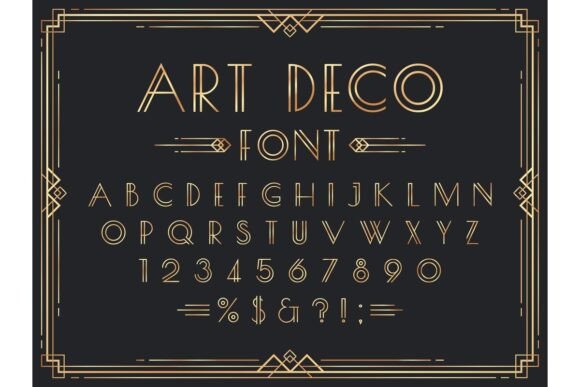
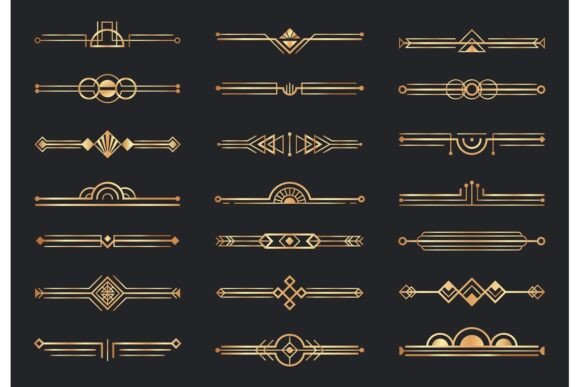
To truly appreciate the utility of these assets, one must understand their structural composition. Unlike organic flourishes found in Victorian or Rococo styles, Art Deco is defined by its adherence to geometry and symmetry. A standard collection of decorative horizontal lines in this style typically features sharp angles, stepped forms, sunburst motifs, and chevron patterns. When rendered in gold, these shapes take on a luminous quality that draws the eye without overwhelming the surrounding content.
The term Golden Art Deco Dividers. Decorative encompasses a wide variety of vector sets, each offering unique variations on the core theme. Some designs focus on minimalism, utilizing thin, crisp lines interrupted by a single geometric gem. Others embrace maximalism, featuring intricate latticework and layered ornaments that mimic the metalwork of the Chrysler Building or the interior of the Great Gatsby's mansion. This diversity allows creators to select a divider that matches the specific tone of their work, ranging from understated sophistication to bold, theatrical flair.
Psychological Impact and Brand Perception
Why do professionals continue to reach for these vintage styles? The answer lies in the psychological association between gold, geometry, and success. Gold has historically represented wealth, stability, and high quality. When combined with the structured confidence of Art Deco geometry, the resulting visual cue suggests authority and timelessness. For business owners and marketers, incorporating these luxury 1920s decoration elements into brochures, websites, or packaging can subtly influence consumer perception, positioning a brand as established and premium.
Furthermore, the use of fancy vintage style ornaments creates a sense of nostalgia. In a fast-paced digital environment, content that evokes a specific, romanticized era can slow down the viewer, encouraging them to linger on the page. This increased dwell time is crucial for engagement metrics. By breaking up text with a beautifully crafted retro gold divider, you provide a visual resting point that maintains the reader's interest while reinforcing the brand's aesthetic identity.
Practical Applications Across Industries
The versatility of this vector set extends far beyond simple document formatting. Different sectors leverage these decorative tools to solve specific design challenges while maintaining a cohesive look.
- Publishing and Editorial: In magazines and eBooks, chapter breaks require distinct visual markers. A heavy, ornate geometric border signals a major transition, while a lighter line might separate sub-sections. This hierarchy helps readers navigate long-form content effortlessly.
- Wedding and Event Planning: The "Great Gatsby" theme remains a staple for weddings and galas. Invitations, menus, and seating charts rely heavily on ornaments in fancy vintage style to set the mood before a guest even arrives. These dividers frame text elegantly, making standard information feel like part of a curated experience.
- Hospitality and Dining: High-end restaurants and hotels often use Art Deco motifs in their interior design. Extending this to digital menus or loyalty cards using Golden Art Deco Dividers. Decorative graphics ensures brand consistency across physical and digital touchpoints.
- Educational Materials: History educators and researchers creating presentations on the Roaring Twenties can use authentic-looking dividers to enhance the educational value of their slides, providing visual context that supports the curriculum.
Technical Considerations for Digital Implementation
While the aesthetic appeal is undeniable, the technical execution of these dividers requires attention to detail, particularly in web design. Most modern collections are provided as vector sets (SVG, EPS, AI), which is ideal for scalability. Unlike raster images (JPG, PNG), vectors allow the retro gold dividers to be resized infinitely without losing clarity. This is essential for responsive design, where a divider must look crisp on a 4K monitor and a mobile phone screen alike.
When implementing these elements on a website, developers should consider the file weight and loading speed. Although vectors are generally lightweight, complex luxury 1920s decoration elements with thousands of anchor points can sometimes bog down rendering engines. It is often prudent to simplify the vector path where possible or use optimized SVG code. Additionally, color management is critical. True gold is difficult to replicate on screens, which use RGB light rather than metallic ink. Designers often achieve the best effect by using gradients—shifting from a pale yellow to a deep ochre—to simulate the shine of metallic gold.
Integrating Vintage Styles with Modern Minimalism
A common misconception is that Art Deco elements clash with modern minimalist design trends. However, when used strategically, they can create a striking contrast that highlights both styles. The key is restraint. Instead of lining every paragraph with a decorative horizontal line, a designer might use a single, substantial Golden Art Deco Divider to separate the hero section from the main content. This approach treats the divider as a piece of art rather than a functional utility.
Color palettes also play a significant role in this integration. While traditional Art Deco often pairs gold with black, modern interpretations might pair golden art deco dividers with navy blue, emerald green, or even stark white backgrounds. This updates the vintage feel, making it relevant for tech startups or contemporary fashion brands that want to convey heritage without appearing dated. The geometric nature of the borders aligns well with the grid systems used in modern web layouts, ensuring that the ornamentation feels structured rather than chaotic.
Curating the Right Asset for Your Project
With countless resources available online, selecting the right collection of decorative horizontal lines can be daunting. Professionals should look for sets that offer variety within a unified style. A high-quality pack will include not just full-width dividers, but also corner pieces, frames, and standalone icons that share the same line weight and geometric logic. This modularity allows for greater creative freedom.
Licensing is another crucial factor. For commercial projects, ensuring that the vector set comes with the appropriate usage rights is non-negotiable. Many independent artists sell premium packs that include extended licenses for merchandise or large-scale print runs, which is often a safer bet than relying on free resources with ambiguous terms. Investing in a premium set of Golden Art Deco Dividers. Decorative assets often yields higher resolution files and more thoughtful design details, such as varied stroke endings and balanced proportions.
The Enduring Legacy of Geometric Ornamentation
The resurgence of Art Deco in the 21st century is not merely a fleeting trend; it is a testament to the power of strong geometric design. In a world saturated with soft shadows, rounded corners, and flat design, the sharp lines and metallic sheen of the 1920s offer a refreshing alternative. They remind us of an era that celebrated human achievement, industrial progress, and artistic innovation.
For creators, utilizing these elements is an opportunity to tap into that rich history. Whether framing a photograph, separating sections of a legal document, or accentuating a wedding invitation, Golden Art Deco Dividers. Decorative components add a layer of sophistication that is hard to achieve with standard typography alone. They transform the mundane act of dividing space into an artistic expression.
As we move forward in the digital age, the demand for unique, character-rich design elements will only grow. The ability to seamlessly blend the fancy vintage style of the past with the functional requirements of the present is a valuable skill. By mastering the use of these retro gold dividers and understanding their historical context, designers and content creators can produce work that feels both timeless and immediately engaging. The result is content that does not just inform, but inspires, proving that the glamour of the Jazz Age still has a vital place in our modern visual vocabulary.